 English
 中文
中文In the fast-evolving electronics industry, printed circuit boards (PCBs) serve as the core carrier for all electronic components, and the choice of substrate material directly determines the product’s service life, operating stability, environmental adaptability and application scope. Among numerous mainstream PCB base materials, FR4 and Polyimide (PI) have always occupied dominant positions, covering most consumer electronics, industrial control equipment, aerospace devices and high-precision intelligent hardware fields.
Many electronic engineers, purchasing practitioners and circuit design enthusiasts often struggle when selecting board materials: which one is more suitable for conventional civilian products? Which material can withstand extreme high temperature and frequent bending working conditions? What are the essential differences in cost, performance and practical application between FR4 and Polyimide? This detailed comparison guide will sort out all core advantages, shortcomings and applicable scenarios of the two classic PCB materials for you.
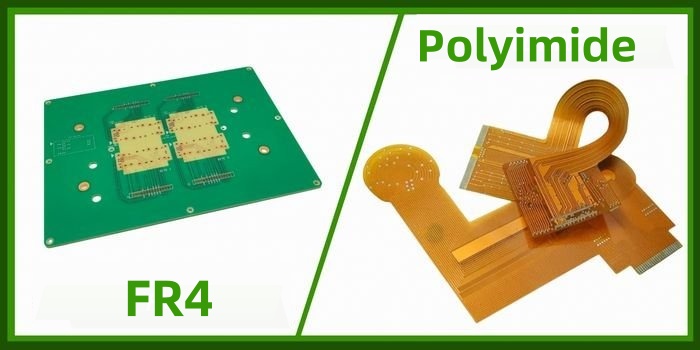
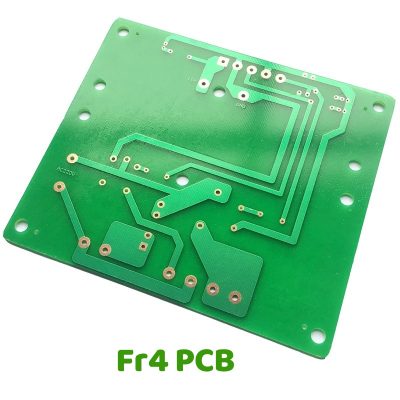
As the most widely used universal PCB substrate material on the market, FR4 has won long-term market recognition with its balanced comprehensive performance and cost-effective price. It features excellent insulation performance, stable mechanical rigidity, good flame retardancy and reliable chemical corrosion resistance. Under conventional room temperature and daily working environment, FR4-based PCBs can maintain stable circuit conduction performance, with neat board surface and mature processing technology, which is convenient for batch production, cutting and circuit layout.
In terms of practical use, FR4 materials are perfectly compatible with most low and medium-power electronic products. Whether it is daily household appliances, communication accessories, ordinary power supply modules, digital consumer products or general industrial control circuit boards, FR4 can fully meet the basic use demands. In addition, its moderate raw material cost and low mass production processing cost greatly help enterprises control product research and development and production expenses, and it is the preferred cost-effective choice for mass-produced electronic products.
Of course, FR4 also has obvious performance limitations. Its high-temperature resistance is relatively ordinary, and it is easy to deform and lose stability in long-term high-temperature working environments. Meanwhile, its toughness is insufficient, and it cannot adapt to repeated bending, folding and flexible installation scenarios, so it is difficult to apply to high-end precision equipment and special extreme working environment products.
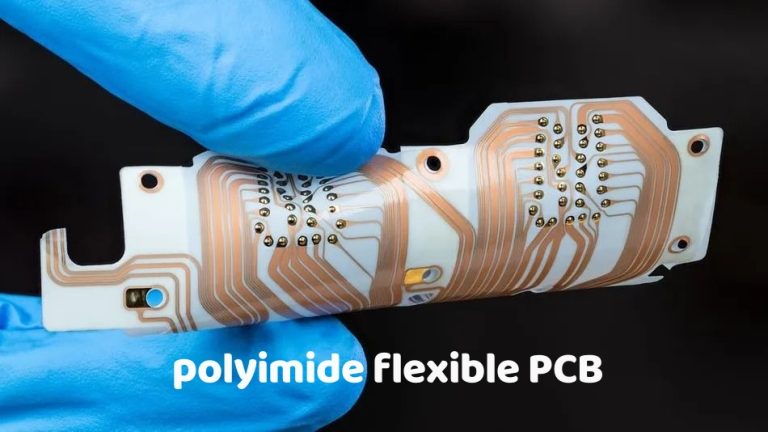
Different from conventional rigid board materials, Polyimide (PI) is a high-end flexible PCB substrate material famous for its super comprehensive performance, and it is also a core special material indispensable in high-precision electronic manufacturing. Its most prominent advantages lie in outstanding high and low temperature resistance, excellent flexibility, ultra-light texture and stable dimensional stability.
Polyimide materials can maintain stable physical and electrical properties in an extremely wide temperature range, free from the influence of high-temperature heat generation and low-temperature cold environment. At the same time, it has superb bending resistance and folding resistance, and can withstand tens of thousands of repeated bending without breaking circuits or damaging the substrate, which perfectly meets the design demands of curved installation, built-in narrow space and wearable flexible electronic equipment.
In high-end application fields, Polyimide PCBs show irreplaceable strong strength. They are widely used in aerospace equipment, automotive intelligent electronic components, medical precision instruments, wearable smart devices, high-end camera internal circuits and precision communication equipment. In addition, Polyimide also has excellent radiation resistance, insulation and heat dissipation performance, which can effectively improve the overall safety and long-term service life of high-precision electronic products.
Restricted by raw material characteristics and complex processing technology, the production cost of Polyimide materials is much higher than that of FR4, and the mass production cycle is relatively longer, so it is not suitable for ordinary low-end electronic products that pursue low cost and large volume.
To sum up, there is no absolute distinction between good and bad between FR4 and Polyimide PCB materials, only the most suitable choice according to product positioning and use scenarios.